
In the realm of electromechanical components, mechanical fatigue is the enemy. For standard consumer electronics, a sensor that lasts a few years is sufficient. But for industrial asset trackers, automotive safety systems, or smart meters installed for a decade, you need components that refuse to quit. The KD1912 is the flagship of endurance in the SMT vibration sensor lineup, with a massive rated lifespan of ≥ 5,000,000 cycles.
1. Unmatched Durability: 5 Million Triggers
The defining feature of the KD1912 is its longevity. While standard market alternatives often fail around 100k to 500k cycles, the KD1912 utilizes advanced materials and a vacuum-sealed core-shell structure to achieve 5 million reliable triggers. This makes it perfect for high-frequency environments: Machinery Condition Monitoring (detecting continuous vibrations in industrial equipment), Smart Logistics (tracking packages that undergo constant handling), and Automotive (systems exposed to perpetual road vibration).

2. Omnidirectional "Wake-Up" Technology
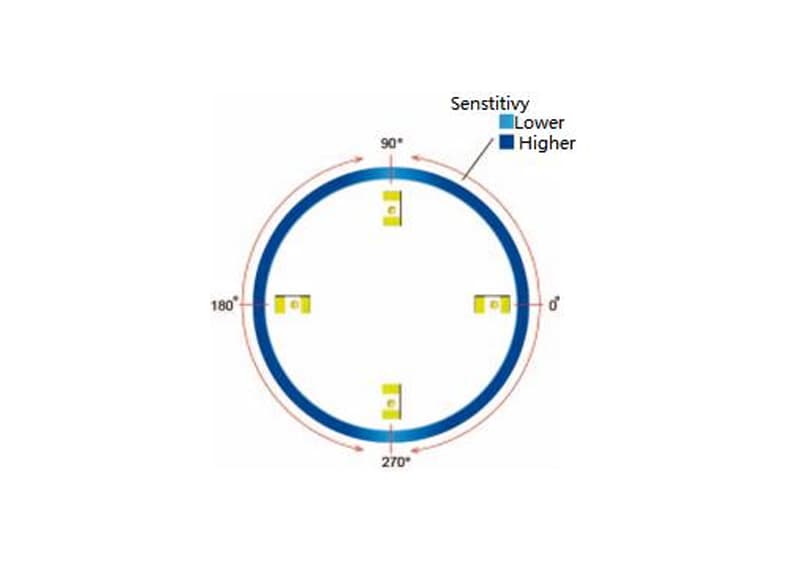
Like its predecessors, the KD1912 solves the power consumption paradox in IoT: How do you keep a device ready without draining the battery? The solution: the sensor acts as a passive hardware switch. Static: Ideally 0 power consumption (High Impedance). Motion: When moved in any direction (360° coverage), the internal ball closes the circuit, sending a pulse to wake the MCU.
3. Electrical & Environmental Specs
| Feature | Specification | Note |
|---|---|---|
| Operating Voltage | 0.5V – 36V DC | Wide compatibility |
| Current Rating | 50nA – 10mA | Ultra-low power |
| Temperature | -40°C to +85°C | Harsh environment ready |
| Life Cycles | ≥ 5,000,000 | Industrial benchmark |
| Sealing | Hermetically Sealed | Waterproof & dustproof |
| Package | SMD | Automated assembly compatible |
4. Application Circuit Design
To get the most out of the KD1912, correct circuit implementation is key. The output is a series of rapid pulses rather than a steady state change. Connect the sensor between Ground and an MCU Pin pulled High. For debouncing: use the recommended RC filter (Capacitor C1 + Resistor R2) to smooth transients (hardware approach), or implement a counter in firmware — only wake the full system if N pulses are detected within T milliseconds (software approach).

5. Where to Use the KD1912?
The premium endurance of this sensor qualifies it for: Smart Metering (tamper detection for utility meters expected to last 10+ years), Animal Tracking (smart collars for livestock that move constantly), Bicycle/E-Bike Alarms (detecting movement for anti-theft systems), and Remote Controls (power-saving wake-up features).
Interactive Demo
Download the Product PDF
Get the corresponding specification sheet for this article.
Interested in integrating this sensor?
Request a free sample and get technical support from our engineering team.